ANTARCTICA (AP) — The Southern Ocean is one of the most remote places on Earth, but that doesn't mean it is tranquil. Tumultuous waves that can swallow vessels ensure that the Antarctic Peninsula has a constant drone of ocean. While it can be loud, the view is serene — at first glance, it is only deep blue water and blinding white ice.
Several hundred meters (yards) off the coast emerges a small boat with a couple dozen tourists in bright red jackets. They are holding binoculars, hoping for a glimpse of the orcas, seals and penguins that call this tundra home.
They are in the Lemaire Channel, nicknamed the “Kodak Gap,” referring to the film and camera company, because of its picture-perfect cliffs and ice formations. This narrow strip of navigable water gives anybody who gets this far south a chance to see what is at stake as climate change, caused mainly by the burning of oil, gas and coal, leads to a steady rise in global average temperatures.
The Antarctic Peninsula stands out as one of the fastest warming places in the world. The ocean that surrounds it is also a major repository for carbon dioxide, a greenhouse gas that contributes to warming. It captures and stores roughly 40% of the CO2 emitted by humans, according to the National Oceanic and Atmospheric Administration.
On a recent day, Gentoo penguins, who sport slender, orange beaks and white spots above their eyes, appeared to be putting on a show. They took breaks from their dives into the icy water to nest on exposed rock. As the planet warms, they are migrating farther south. They prefer to colonize rock and fish in open water, allowing them to grow in population.
The Adelie penguins, however, don't have the same prognosis. The plump figures with short flippers and wide bright eyes are not able to adapt in the same way.
By 2100, 60% of Adelie penguin colonies around Antarctica could threatened by warming, according to one study. They rely on ice to rest and escape predators. If the water gets too warm, it will kill off their food sources. From 2002 to 2020, roughly 149 billion metric tons of Antarctic ice melted per year, according to the National Aeronautics and Space Administration.
For tourists, Antarctica is still a giant, glacial expanse that is home to only select species that can tolerate such harsh conditions. For example, in the Drake Passage, a dangerous strip of tumultuous ocean, tourists stand in wonder while watching orca whales swim in the narrow strip of water and Pintado petrels soar above.
The majestic views in Antarctica, however, will likely be starkly different in the decades ahead. The growing Gentoo penguin colonies, the shrinking pieces of floating ice and the increasing instances of exposed rock in the Antarctic Peninsula all underscore a changing landscape.
___
Associated Press writer Caleigh Wells contributed to this report from Cleveland.
___
The Associated Press’ climate and environmental coverage receives financial support from multiple private foundations. AP is solely responsible for all content. Find AP’s standards for working with philanthropies, a list of supporters and funded coverage areas at AP.org.
latest_posts
- 1
 The Tradition of Stone: A Gander at Notable Structures Through the Ages
 - 2Am I a Summer, or is this a scam? What I learned from color analysis.
- 3Triple polar vortex to plunge central and eastern U.S. into Arctic cold through mid-December
- 4From ‘Project Hail Mary’ to Artemis II, spaceflight captures audiences when it centers on people because human space travel is hazardous
- 5Shelby County deputies charged with assault, placed on leave




- The Significance of Health Projects in Senior Protection.
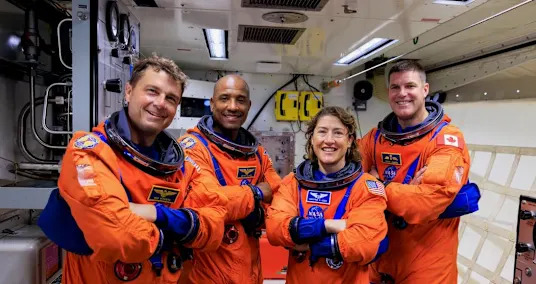
- He walked on the moon in 1972. This is his advice for the Artemis II astronauts.
- As reefs vanish, assisted coral fertilization offers hope in the Dominican Republic
- Make your choice for a definitive Christmas getaway destination!
- Vote in favor of the juice that you love for its medical advantages!
- Politics at the table? Drinking the wine you brought? An etiquette expert's Thanksgiving dos and don'ts.
- Novartis to build manufacturing hub in North Carolina, creating 700 jobs
- People who talk with their hands seem more clear and persuasive – new research
- Brazil's former President Jair Bolsonaro seeks house arrest for prison time citing health issues