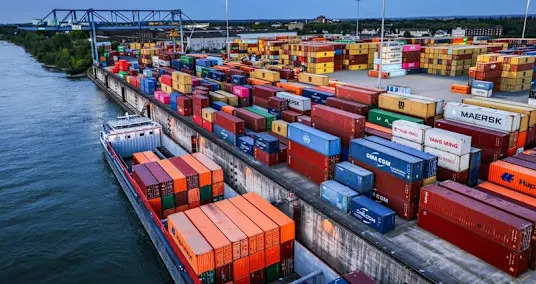
Beyond oil, the Strait of Hormuz blockade is now rippling through another critical artery of the global economy: fertilizers.
Analysts warn this disruption could spiral into a multi-country food crisis well beyond the energy markets.
The Iran War's Quiet Domino Effect
Around one-third of the world's seaborne fertilizer trade moves through the Strait of Hormuz. Countries exposed to instability in the Persian Gulf export nearly half of the global urea and 30% of the ammonia, two nutrients essential for crop growth.
Follow us on X to get the latest news as it happens
https://twitter.com/jackprandelli/status/2040727009546940709?s=20
Since the conflict began on February 28, shipping through the strait has collapsed by more than 95%, according to UNCTAD. The chain reaction is straightforward and severe: no fertilizer → smaller harvests → spiking food prices → basic staples become unaffordable for millions.
This is not a distant risk. It is already unfolding. Granular urea prices in Egypt, a major global benchmark for nitrogen fertilizers, have jumped to roughly $700 per metric ton from a pre-war range of $400 to $490.
“Urea fertilizer is up 50% since the Strait closed five weeks ago. 30% of the world's fertilizer passes through Hormuz. The Gulf produces nearly half of global urea and 30% of ammonia. European and African farm markets are already paying for it,” The Hormuz Letter posted.
The Food and Agriculture Organization (FAO) projects global fertilizer prices will average 15% to 20% higher in the first half of 2026 if the disruption persists. FAO Chief Economist Máximo Torero called the blockade one of the most severe shocks to global commodity flows in recent years.
UBS economist Arend Kapteyn projects fertilizer prices will rise 48% year over year, pushing global food prices up 12%.
Why Timing Makes This Worse
The timing of the disruption is especially critical. In countries like India, fertilizer shortages directly affect planting decisions during the kharif season. Miss this window, and the consequences are locked in for the rest of the year.
“Procurement for the kharif season typically begins in May, ahead of sowing of crops such as rice and cotton in June and July, leaving a narrow window before fertilizer shortages could start to affect the harvest yield,” The Guardian reported.
The crisis is structural, not just logistical. The Hormuz disruption could have food supply consequences lasting well beyond any ceasefire or resolution.
https://twitter.com/ekwufinance/status/2039717288471875588?s=20
Shanaka Anslem Perera argues that the 2026 crisis mirrors Sri Lanka’s 2022 collapse, but instead of a policy move, it’s driven by supply disruptions from the Strait of Hormuz.
latest_posts
- 1
 Faulty glucose monitors linked to 7 deaths and more than 700 injuries, FDA warns
 - 2The Way to Fruitful Weight reduction: Individual Wellbeing Excursions
- 3Why is everyone talking about Paul Dano? George Clooney becomes the actor's latest defender in this 'time of cruelty.'
- 4From Dread to Certainty: Individual Accounts of Strengthening
- 5Indian rocket launches record-breaking BlueBird 6 smartphone satellite to orbit (video)


- Flu illness count nears 5 million, with New York City among the hardest hit
- Warnings rise for U.S. as severe flu strain causes outbreaks in Canada, U.K.
- OECD: Iran war dampening global growth
- Doritos and Cheetos debut 'NKD' options, without artificial colors or flavors
- Step by step instructions to Guarantee Your Fender bender Legal counselor has Areas of strength for a Record
- Artemis II crew take new photo of far side of the moon
- Dozens injured in Russia after train crashes, overturns
- FBI arrests Brian Cole Jr. in Jan. 6 pipe bomb investigation, ending 5-year hunt
- Kremlin: Russian troops conquer Pokrovsk after year of intense combat